
Buying a fixer upper has always been a tried and true way to get into real estate.Buy the ugly house. Put some money into it. Build sweat equity. End up with something worth more than you paid.That

Dated: August 4 2026
Views: 42
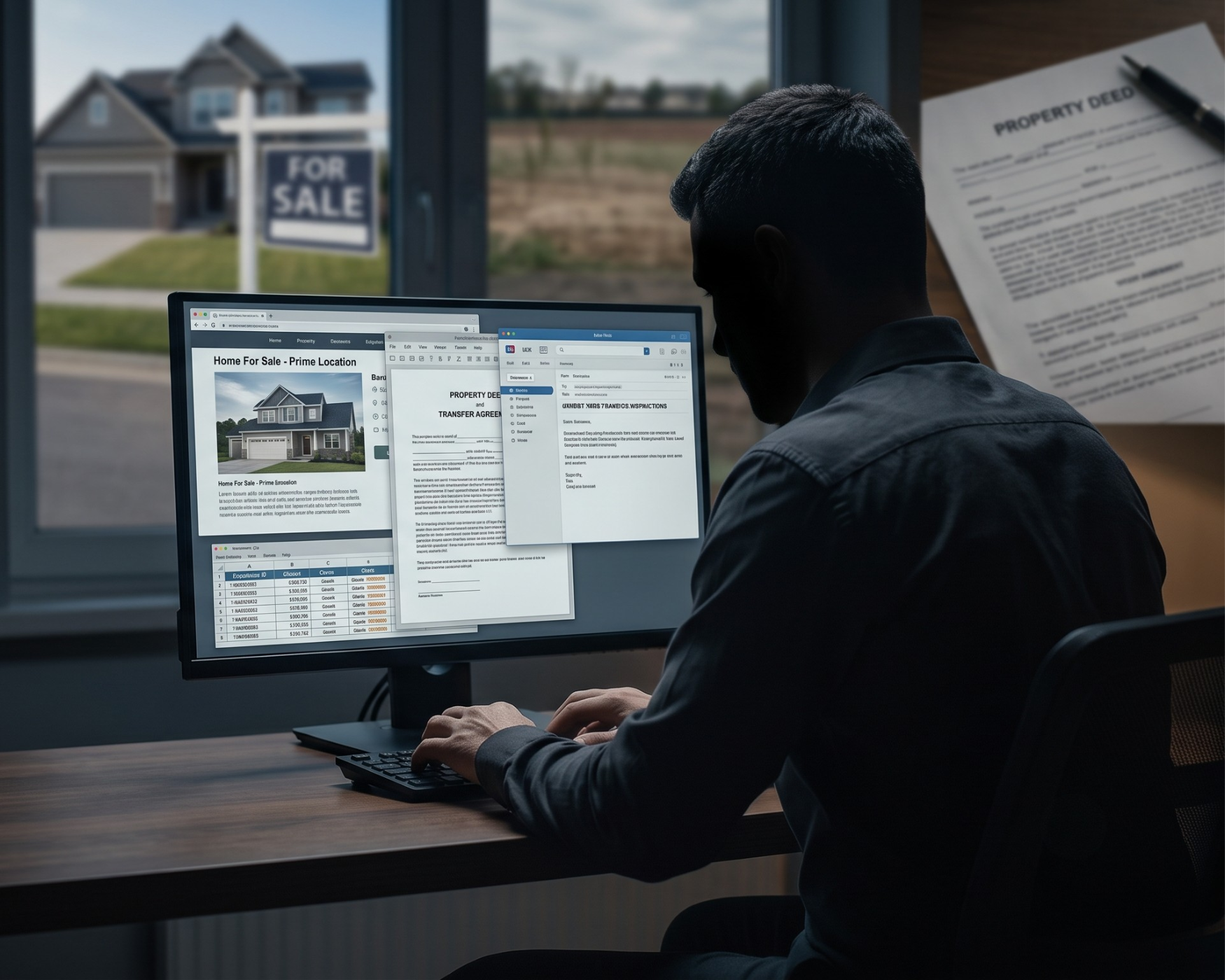
Buying or selling real estate is exciting, but it also involves something that attracts scammers: large amounts of money changing hands.
Unfortunately, criminals have become increasingly sophisticated in targeting home buyers, sellers, landlords, and even real estate professionals. Some scams are obvious. Others are carefully designed to look like legitimate communication from someone you already know and trust.
The good news is that you don't need to be a cybersecurity expert to protect yourself.
The most important thing you can do is understand how these scams work, slow down when something feels unusual, and independently verify important information before sending money or personal information.
Having a trusted and experienced Realtor, lender, and title or escrow professional on your team can also be an important part of your defense—but you still need to be an active participant in protecting yourself.
Here are four of the most common real estate scams consumers should understand.
This is one of the most serious scams facing home buyers and sellers because the potential losses can be enormous.
Here's how it often works:
A scammer gains access to or monitors communications involving a real estate transaction. As closing approaches, they send an email or message that appears to come from the title company, escrow officer, Realtor, lender, or another trusted professional.
The message may say something like:
"We've updated our wiring instructions. Please send your closing funds to this new account."
Everything may look legitimate.
The email may use the correct property address. It may reference the actual closing date. It may even appear to come from someone you've been communicating with throughout the transaction.
That's what makes these scams so dangerous.
The FBI specifically warns that business email compromise schemes can involve criminals spoofing email addresses or impersonating trusted parties, including title companies and other professionals involved in real estate transactions.
Never rely solely on an email to verify wiring instructions.
Before sending money:
Call your title or escrow company using a phone number you already have or obtained independently.
Confirm the wiring instructions verbally.
Be extremely cautious about last-minute changes.
Never assume a familiar-looking email is legitimate.
If you're unsure, stop and ask your Realtor, title company, or other trusted professional to help verify the request.
The CFPB also recommends discussing money-transfer procedures with trusted professionals before closing so you know what to expect before a scammer has an opportunity to create confusion.
My rule of thumb: If someone sends you new wiring instructions, treat them as suspicious until you've independently verified them.
Scammers know that people searching for a home are often motivated and under pressure.
They take advantage of that.
A scammer may copy photos and descriptions from a legitimate listing and repost the property with their own contact information. In other cases, they create a completely fake property listing or advertise a real property that isn't actually available for rent.
The goal is usually to collect:
Application fees
Security deposits
First month's rent
Personal information
Sometimes even larger payments
The Federal Trade Commission warns that scammers may copy legitimate rental listings, create fake properties, or use attractive pricing to get consumers to act quickly.
Before sending money or sensitive personal information:
Search the property address online.
Check whether the property is listed elsewhere with different contact information.
Verify the owner or property management company independently.
Look for the property on the management company's official website.
Be suspicious of a price that seems dramatically below comparable properties.
Be cautious if someone refuses to let you see the property.
Don't send money simply because someone says you need to "hold" the property immediately.
Be especially cautious with listings found through social media or other platforms where anyone can post an advertisement.
If you are working with a licensed Realtor, use that professional as another layer of verification. A legitimate Realtor should be able to help you determine whether a property is actually available and who is authorized to represent it.
This scam targets property owners rather than just buyers.
A criminal identifies a property—sometimes one that is vacant, owned free and clear, or owned by someone who lives out of state—and attempts to impersonate the actual owner.
The scammer may try to:
Sell the property
Refinance it
Take out a loan against it
Transfer ownership
In some cases, the fraudster attempts to create fake identification or documents to make the transaction appear legitimate.
This is particularly concerning for vacant land and investment properties because the owner may not live nearby and may not regularly check on the property.
If you own real estate, especially vacant land, a second home, or an investment property:
Make sure your current mailing address and contact information are accurate with the county assessor and recorder.
Monitor your property records when possible.
Consider signing up for any property fraud alert programs offered by your local county or recorder's office.
Keep your contact information current with your Realtor and title company if they have previously assisted you.
Be cautious about unexpected communications regarding a sale, refinance, or transfer of your property.
Make sure your contact information is easy to find. This may sound counterintuitive, but being difficult to contact can sometimes make it harder to verify that a transaction is legitimate.
For example, if you own vacant land and a scammer attempts to sell it, you want the title company and Realtor involved in that transaction to be able to locate you and independently verify that you actually authorized the sale.
Having current contact information with the appropriate public agencies and maintaining relationships with trusted professionals can create another layer of protection.
Vacant land can be particularly attractive to scammers.
A fraudster may advertise a parcel they don't own or have no authority to sell. They may create a convincing listing, communicate with prospective buyers, and attempt to collect earnest money or other funds.
These scams can be especially difficult for buyers because vacant land doesn't have a house to visit or a seller who necessarily needs to meet you at the property.
Before purchasing land:
Verify the property owner's name through county records.
Confirm the parcel number and legal description.
Work with a reputable title company.
Have the title company verify ownership and identify any liens or other title issues.
Don't send money directly to an unknown individual.
Be cautious if you're being pressured to bypass normal title and escrow procedures.
Work with a Realtor who understands land transactions and local market conditions.
A legitimate real estate transaction should have a clear paper trail and established professionals involved.
If someone wants you to skip the title company, avoid a formal escrow process, or send money directly to them, that's a major red flag.
Although these scams look different, many rely on the same tactics:
"Send the money today."
"Don't contact the title company. Just follow these instructions."
"Send a wire to this new account."
"This property is well below market, but you need to act immediately."
"I'm your Realtor. Here's the new information."
The more pressure you feel to act immediately, the more important it is to slow down and verify.
A trusted Realtor can be an important part of your fraud prevention strategy. Deciding on who to work with, check out Does it Really Matter What Realtor You Use
An experienced professional may recognize unusual behavior, understand normal transaction procedures, and know the other professionals involved in the transaction.
But your Realtor can't protect you from every scam.
You should still:
Verify wiring instructions independently.
Confirm unusual requests by phone.
Protect your passwords and email accounts.
Be careful about sharing personal information.
Question unexpected changes.
Speak up when something doesn't look right.
Think of your Realtor as another layer of protection, not a substitute for your own awareness.
The best defense is a team of professionals who communicate with each other and a consumer who stays engaged throughout the process.
If you believe you've sent money to a scammer or your personal information has been compromised, act immediately.
Depending on the situation:
Contact your bank or financial institution immediately. Ask whether the transaction can be recalled or stopped.
Contact your title or escrow company and Realtor so they can help determine what happened and alert other parties.
Report suspected wire fraud to the FBI's Internet Crime Complaint Center (IC3).
Report other scams to the FTC and appropriate local authorities.
If personal information was compromised, take steps to protect your identity and financial accounts.
With wire fraud, time matters. The sooner you report the incident, the better the chance that financial institutions or law enforcement may be able to intervene.
Before you send money or sensitive information, ask yourself:
☐ Did I independently verify who I'm communicating with?
☐ Did I call a trusted phone number, not simply reply to the email I received?
☐ Am I being pressured to act immediately?
☐ Have I independently confirmed the property, owner, and transaction?
☐ Does the payment method or request seem unusual?
If something doesn't feel right, stop. Trust your gut!
A legitimate transaction can withstand a few extra minutes of verification.
Real estate scams aren't going away, and technology is making it easier for criminals to impersonate people and businesses we trust.
But that doesn't mean you should be afraid to buy or sell real estate.
It means you should be informed.
Use established professionals. Verify important information independently. Slow down when something changes unexpectedly. And don't be afraid to ask questions.
A trusted Realtor can be a valuable resource throughout the process, but the safest transactions happen when everyone involved, including the buyer or seller, is paying attention.
If you're considering buying or selling a home and want to understand what the process should look like before you get started, I'm always happy to help you build a plan and connect you with trusted professionals who can help protect your interests throughout the transaction.

With over a decade of experience in the Northern Nevada real estate market, I bring a wealth of knowledge and expertise to every transaction. I have helped over 300 clients buy and sell homes, and I p....
Buying a fixer upper has always been a tried and true way to get into real estate.Buy the ugly house. Put some money into it. Build sweat equity. End up with something worth more than you paid.That
Here's your September 2026 Real Estate Market Report for Northern NV!Make sure to check out the coupons from some great local vendors who have agreed to offer discounts to my clients!
Buying or selling real estate is exciting, but it also involves something that attracts scammers: large amounts of money changing hands.Unfortunately, criminals have become increasingly
A major milestone in U.S. housing policy has officially arrived.The 21st Century ROAD to Housing Act (H.R. 6644) has become law after passing Congress with overwhelming bipartisan support.
 The data relating to real estate for sale on this web site comes in part from the Broker Reciprocity program of the Northern Nevada Regional Multiple Listing Service®. Real estate listings held by brokerage firms other than the owner of this site are marked with the Broker Reciprocity logo and detailed information about those listings includes the name of the listing brokerage. Copyright 2026 of the Northern Nevada Regional Multiple Listing Service MLS. All rights reserved.
